A PLC controls a machine. SCADA lets people watch and manage many machines from a screen. Learn PLC first, because SCADA has nothing to display until a controller is reading sensors and switching outputs.
What a PLC does
A programmable logic controller is an industrial computer. It reads inputs such as sensors and push buttons, runs your program, and switches outputs such as motors and valves, thousands of times a second. PLC training teaches wiring, ladder logic and fault-finding.
What SCADA does
Supervisory control and data acquisition software sits above the controllers. It collects live values, draws them on mimic screens, raises alarms and stores history. SCADA training teaches tag configuration, screen design, alarms and trends.
Where HMI and VFD fit
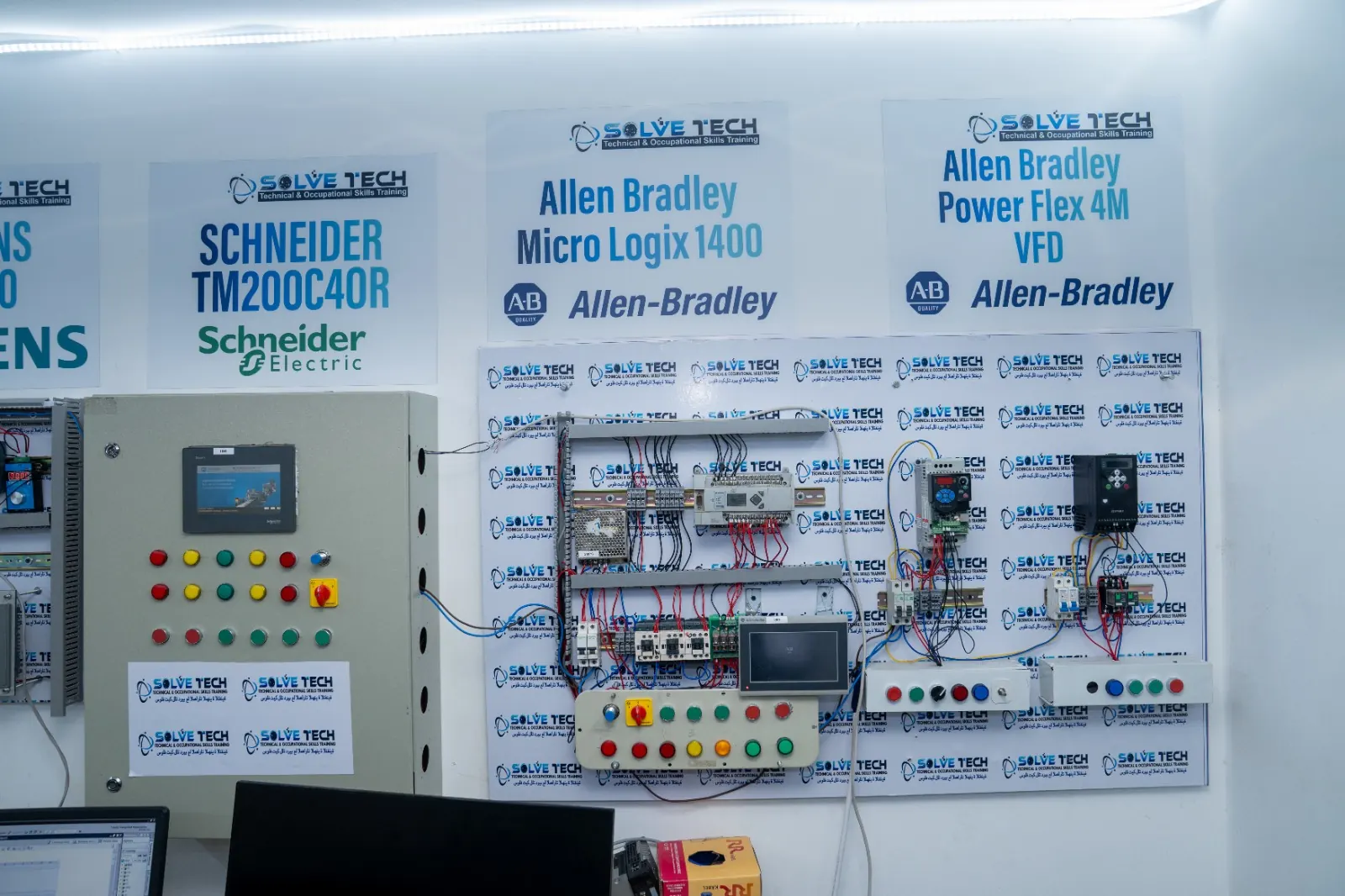
An HMI is the local operator panel on a machine. A VFD controls motor speed. In a real plant, all four work together, which is why they are often taught as one industrial automation program.
The order that works
- Electrical basics and control wiring.
- PLC programming on real hardware.
- HMI screens.
- VFD setup.
- SCADA.
See all industrial automation courses.
Frequently asked questions
Can I learn SCADA without PLC knowledge?
You can learn the software, but you will not understand what the data means. Start with PLC.
Which PLC brand should I learn?
Learn the logic on one brand well. Siemens and Allen-Bradley are both common, and the concepts transfer.
Is PLC training useful for electrical engineers?
Yes. Maintenance, panel building and automation roles all ask for it.