
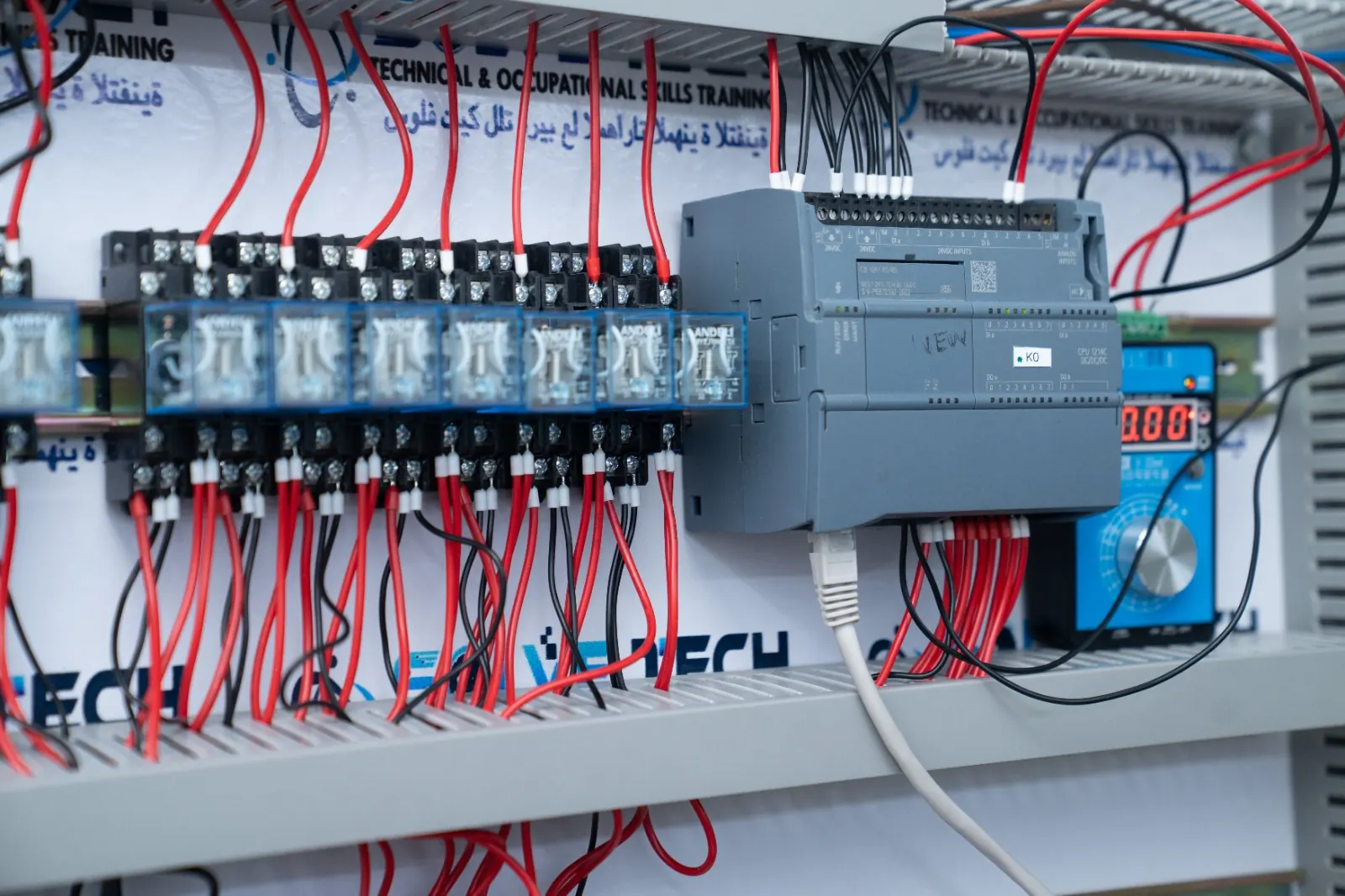
A building management system (BMS) is the control network that monitors and runs a building's HVAC, lighting, power and safety equipment from one place. It keeps conditions comfortable, reports faults and helps reduce energy use.
The parts of a BMS
- Field devices: sensors, actuators, valves and meters.
- Controllers: DDC panels that run the control logic for each plant item.
- Network: the communication layer that links controllers.
- Front end: the operator workstation with graphics, alarms and trends.
What a BMS engineer does
Reads control drawings, wires and commissions controllers, tests each point, tunes control loops and trains the facilities team to use the front end.
Who should take BMS training
HVAC and electrical engineers moving into controls, facilities engineers who operate buildings, and automation technicians who want building work. BMS training builds on HVAC knowledge, so an HVAC course first is helpful.
Related skills
PLC logic, ELV systems and facility management.
Frequently asked questions
Is BMS the same as PLC?
No. Both are controllers, but BMS equipment is built for building services, while PLCs are general industrial controllers.
Does a BMS save energy?
A well-commissioned BMS helps by scheduling plant and exposing waste, but the saving depends on how it is set up and used.
Is BMS training practical?
It should be. Ask what hardware and software you will work on.